
Staps, a biologist who recently joined Arts & Sciences through the Rules of Life initiative, uses mathematical theory to look into the origins of multicellular life deep into our past.

Merlijn Staps, an assistant professor of biology, is a wizard with numbers and statistics. He joins Arts & Sciences this fall as part of Rules of Life, a hiring cluster and research initiative intended to inspire new collaborations and scientific breakthroughs. He brings with him broad interests that run the gamut from the earliest origins of multicellular organisms to the development of animal stripe and spot patterns.
Before arriving at WashU, Staps was a PhD student, postdoctoral researcher, and lecturer at Princeton University. The Netherlands native earned his bachelor’s and master’s degrees at Utrecht University.
Staps spoke with the Ampersand about his research goals, his computational approach to biology, and his part in the Rules of Life Initiative.
You’ve authored or co-authored papers on a wide range of topics in biology. Is there a central theme to your work?
Like all evolutionary biologists, I’m interested in diversity. I am drawn to systems where life has found many solutions to the same problem, and I want to understand how and why evolution takes these distinct paths.
In my case, that interest has sent me in many different directions. For example, I’ve studied the origins of multicellularity. Evolutionary transitions from single-celled to multi-celled life have happened many times across the tree of life. But every time it happens, the resulting organisms look completely different. Why is that, and what drives those differences?
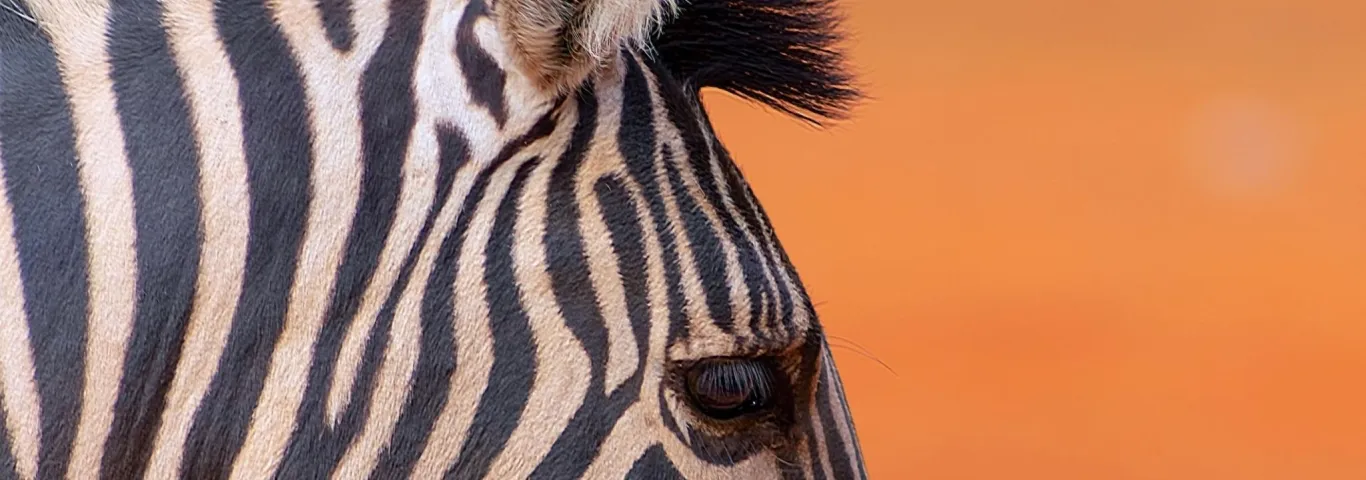
Similarly, I am also fascinated by animal patterns, like the stripes of zebras or spots of leopards. Many organisms have stripe and spot patterns, for instance, for camouflage or to attract mates. It is striking how many different patterns have evolved, even among closely related species. Again, we can ask how and why this diversity arises, and whether it is subject to any general rules. I recently co-authored a paper on this topic in Nature Communications.
How do you use computational methods in your research?
A lot of what I do revolves around mathematical modeling. I try to build models that are general enough to apply to a wide range of organisms, but are still grounded in what we know about the biology. I then use those models to probe how diversity has been generated and what factors constrain it.
I get excited when models reveal hidden order or structure. As an example, I once built a model that can recapitulate the stripe patterns of rodents, like the stripes of chipmunks. This model revealed that even though rodents have many different stripe patterns, there are rules that constrain the diversity. In other words, the model showed that not just any pattern is possible.
Another use of modeling is to identify plausible scenarios. Consider the evolutionary transitions to multicellularity. These events are obviously critical to life on Earth, but they occurred far in the past. We cannot go back in time and study them. This is where mathematical modeling can be valuable, not because it can tell us exactly what happened, but it can help us explore what could have happened in a very systematic way.
“I think it is a great time to be a theoretical biologist, and I can sense a lot of excitement on campus for studying life using theory and computation.”
Can you point to specific examples of this approach?
I was the co-author of a recent Nature Ecology & Evolution paper that looked at ecological factors that could have given early multicellular groups an advantage over single-celled organisms. People usually assume that multicellularity required some intrinsic benefit to evolve, like extra protection from predation. We showed that this is actually not necessary, and found scenarios in which multicellularity can evolve without intrinsic benefits.
In some of these scenarios, multicellularity seems like a bad idea. For example, cells inside multicellular groups may have difficulty accessing oxygen. Groups, being heavier, may also sink to lower, oxygen-deprived water layers, making it even more difficult to get oxygen. In such a scenario, you wouldn’t expect multicellularity to evolve. But in fact, multicellularity provides a hidden benefit: by sinking, multicellular groups also escape competition from cells swimming in higher water layers.
Such dynamic scenarios are very difficult to recreate in a lab, especially if you do not know what you are looking for. But we can identify them as possibilities using modeling and theory.
Now that you’ve arrived at WashU, what’s next?
My lab at WashU will use theory to study how development evolves. I have been fascinated by development for a long time: it is incredible to think that our bodies, and those of other organisms, develop from just a single cell. My lab will use models to study how simple forms of development could have emerged at the origin of multicellularity. The idea here is that insights into the earliest beginnings of development may help us identify principles that also apply to more complex organisms, like humans.
I think it is a great time to be a theoretical biologist, and I can sense a lot of excitement on campus for studying life using theory and computation. And it’s not just coming from the biology department — faculty in physics and chemistry are also pursuing important questions about life and its origins, such as why proteins and other structures in cells form in certain ways and how complex bacterial communities interact to form predictable patterns. These are the sorts of questions at the core of the Rules of Life Initiative, which I am thrilled to be a part of.
Finally, I am excited to start teaching at WashU and involve students in my research. I have been passionate about teaching throughout my career; I especially enjoy teaching biology students about what mathematical and statistical modeling can do for them. I think that learning some modeling is hugely beneficial to any biologist: it helps us to be precise, think systematically, and ultimately ask better questions! I have been very impressed with what I’ve seen from WashU’s approach to undergraduate education, and I cannot wait to contribute to it.


