​Jake Rosenfeld​

https://sociology.wustl.edu/xml/faculty_staff/12093/rss.xml
​Jake Rosenfeld​

​Jake Rosenfeld​

Department Chair of Sociology
Professor of Sociology
Weidenbaum Center on the Economy, Government, and Public Policy Resident Fellow
PhD, Princeton University
research interests:
  • Economic Inequality
  • Work
  • Workplace

contact info:

  • Email: jrosenfeld@wustl.edu
  • Phone: 314-935-6196
  • Office: ​Seigle Hall, Weidenbaum Center-Office 186

office hours:

  • Wednesdays 3:30 - 4:30 p.m.
    By appointment only

mailing address:

  • Washington University
    MSC 1112-228-04
    One Brookings Drive
    St. Louis, MO 63130-4899

Jake Rosenfeld's research and teaching focus on the political and economic determinants of inequality in the United States and other advanced democracies. He is primarily interested in the determinants of wages and salaries, and how these vary across time and place. He received his Ph.D. from Princeton University. 

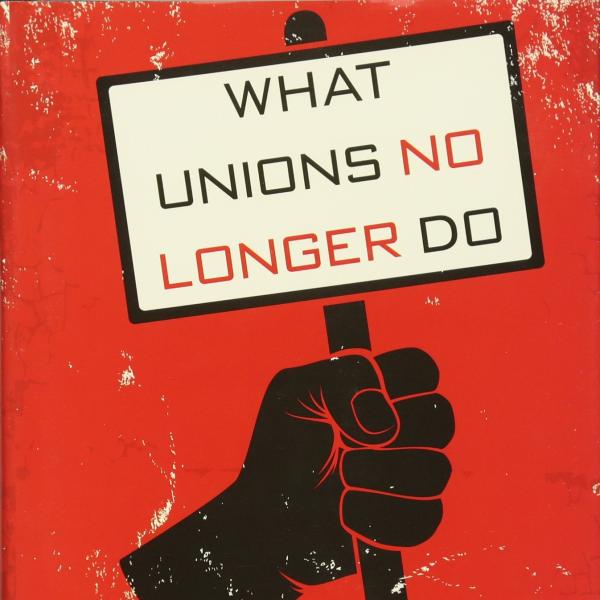
Rosenfeld's 2014 book What Unions No Longer Do (Harvard University Press) shows in detail the consequences of labor’s decline: curtailed advocacy for better working conditions, weakened support for immigrants’ economic assimilation, and ineffectiveness in addressing wage stagnation among African-Americans. The book has received wide attention in the national press and in such outlets as The New Yorker and Harvard Business Review. 


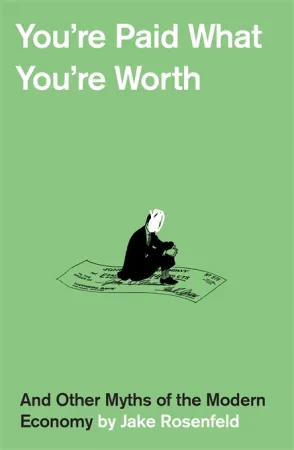
His 2021 book, You're Paid What You’re Worth and Other Myths of the Modern Economy (Harvard University Press), seeks to answer the basic question: who gets what and why? He argues that four dynamics are paramount: power, inertia, mimicry, and demands for equity. Power struggles legitimize pay for particular jobs, and organizational inertia makes that pay seem natural. Mimicry encourages employers to do what peers are doing. And workers are on the lookout for practices that seem unfair. Rosenfeld shows us how these dynamics play out in real-world settings, drawing on cutting-edge social science, original survey data, and a journalistic eye for compelling stories and revealing details.  The book has been featured in the Wall Street Journal, Washington Post, and Harvard Business Review.


            For more details, please visit: www.jake-rosenfeld.com
 

From our podcast:

Hold That Thought Podcast
You’re Paid What You’re Worth: And Other Myths of the Modern Economy

You’re Paid What You’re Worth: And Other Myths of the Modern Economy

A myth-busting book challenges the idea that we’re paid according to objective criteria and places power and social conflict at the heart of economic analysis.

“This is the book to throw at your human resources director―not literally, of course―when any attempt is being made to bamboozle you about how decisions on pay have been made…It is a closely argued, thoroughly researched treatise on how we got here and how pay could be both fairer and more effective as a reward.”
―Stefan Stern, Financial World

“A flat-out revelation of a book by one of the nation’s top scholars of the labor market…required reading for anyone who cares about the future of work in America.”
―Matthew Desmond, author of Poverty, by America

“Jake Rosenfeld pulls back the curtain on the multifaceted cultural, institutional, and market forces at play in wage-setting. This timely book illuminates the power dynamics and often arbitrary forces that have contributed to the egregious inequality in the U.S. labor market―and then lays out a clear blueprint for progressive change.”
―Thea Lee, President of the Economic Policy Institute

Job performance and where you work play a role in determining pay, but judgments of productivity and value are highly subjective. What makes a lawyer more valuable than a teacher? How do you measure the output of a police officer, a professor, or a reporter? Why, in the past few decades, did CEOs suddenly become hundreds of times more valuable than their employees? The answers lie not in objective criteria but in battles over interests and ideals.

Four dynamics are paramount: power, inertia, mimicry, and demands for equity. Power struggles legitimize pay for particular jobs, and organizational inertia makes that pay seem natural. Mimicry encourages employers to do what their peers are doing. And workers are on the lookout for practices that seem unfair. Jake Rosenfeld shows us how these dynamics play out in real-world settings, drawing on cutting-edge economics and original survey data, with an eye for compelling stories and revealing details.

You’re Paid What You’re Worth gets to the heart of that most basic of social questions: Who gets what and why?