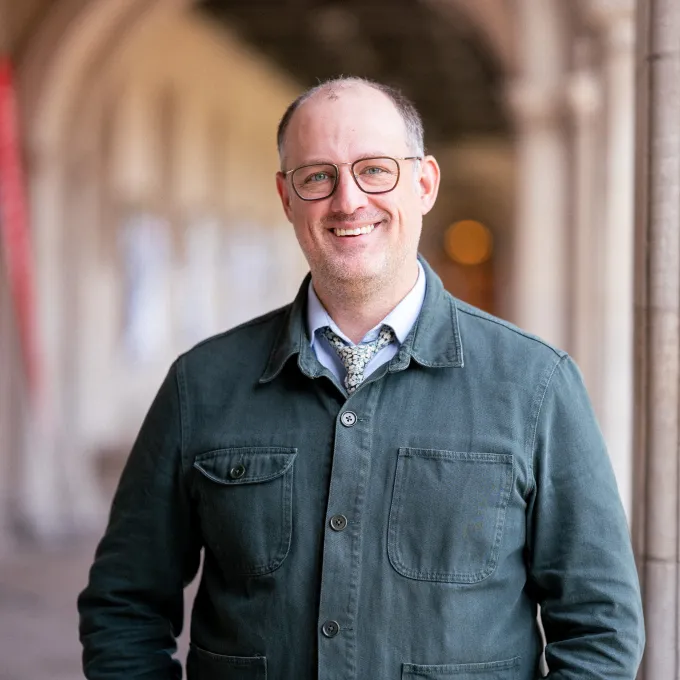
Phillip Maciak

https://english.wustl.edu/xml/faculty_staff/13840/rss.xml
Phillip Maciak

Phillip Maciak

Senior Lecturer in English and American Culture Studies
PhD, University of Pennsylvania
MA, University of Virginia
BA, Amherst College

contact info:

office hours:

  • Wednesday 11:30-1:00, or by appointment

mailing address:

  • Washington University
    CB 1122
    One Brookings Drive
    St. Louis, MO 63130-4899

Phillip Maciak writes and teaches about U.S. literature, visual media, and the idiosyncratic role of screens in our lives today.

Phillip Maciak is the TV critic at The New Republic and an editor-at-large at The Los Angeles Review of Books. His essays on television, film, literature, and pop culture have appeared in The New York Times Magazine, Slate, WIRED, New York Magazine, Defector, n+1, and The Yale Review. He’s currently at work on a cultural history of fatherhood in American life called Dad: A Pop History, which is forthcoming from Plume in 2027.

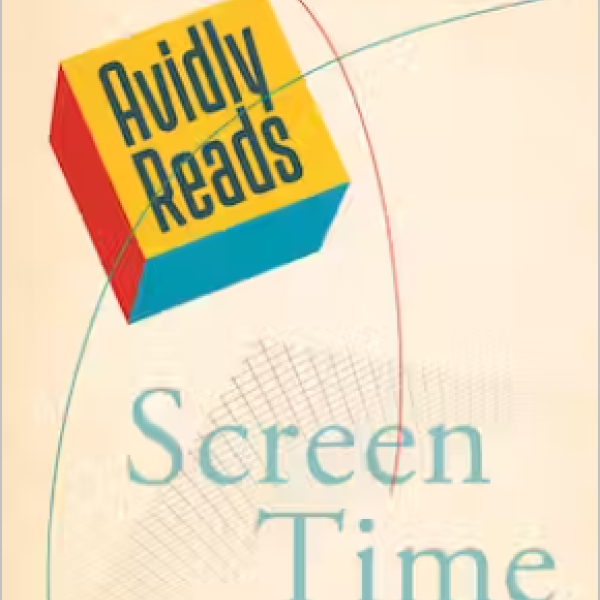
He’s also the author of The Disappearing Christ: Secularism in the Silent Era (Columbia University Press 2019), and Avidly Reads Screen Time (NYU Press 2023).

At WashU, Maciak teaches in both the English Department and the American Culture Studies Program. In English, he teaches a variety of courses, from “The Great American Novel” to “Adaptations: Film / Literature / TV.” His course on “The Writer, the Editor, and the Digital World” contributes to the department’s Publishing Specialization.

In AMCS, where he is also a major advisor, Maciak teaches “Hot Takes: Cultural Criticism in the Digital Age,” “The American Aughts: 1803 / 1903 / 2003,” and “Dad Culture Studies,” a seminar based on his book project. 
Recent Courses

L14 E Lit 302 / “The Great American Novel”

What is the Great American Novel? This is a question that has been hotly debated for decades, from Harriet Beecher Stowe to Ralph Ellison, William Faulkner to Toni Morrison. It's a question with a hundred answers and no answers at all-a question of taste, of prejudice, of time. But what is a "Great American Novel"? What does it look like? What do we expect of it? What have Americans throughout history wanted it to say about America? These are questions we can, and will, answer in this course. As elusive a thing as the Great American Novel has been, the idea of the Great American Novel has a long and fascinating history that mirrors all the major movements of American literature from the American Renaissance to the present. Piecing together the story of this dream, this cultural quest with all of its inclusions and exclusions, is a way of telling a shadow history of American society. The Great American Novel tradition is something like a fossil record of America's shifting norms in relation to race, gender, sexuality, domesticity, democracy, citizenship, immigration, labor, capitalism, and war. And so each presumptive Great American Novel is a new variation in an evolving genre and a new thesis statement of American grandiosity or guilt. By cataloguing shared themes, conventions, and preoccupations, and by paying close attention to a handful of likely-and unlikely-candidates, this course will big questions about American exceptionalism, American tragedy, and the role of art in American culture. Authors will likely include Harriet Beecher Stowe, Herman Melville, Edith Wharton, William Faulkner, Ralph Ellison, Toni Morrison, and Chimamanda Ngozi Adichie. Satisfies the Twentieth Century and later requirement.

L14 E Lit 166 / “A Star is Born: Literature and Celebrity”

It's easy to imagine literature as a hermetically-sealed art form, functioning outside, above, or beyond the petty, gossipy flows of popular culture. But the culture of celebrity has long been both a subject and spark for literary writers. This course tracks the long, intertwined history of fame and literary production from the eighteenth century to the present, Lord Byron to Kim Kardashian. We'll read novels and poems about celebrity, learn about literary celebrities both immortal and forgotten, and study the ways in which the emergence of various media (from print to photography to film and television and social media) have forced literary writers to reckon with the type of visibility that fame bestows on the famous. Course is for first-year, non-transfer students only

Selected Publications

The Disappearing Christ: Secularism in the Silent Era. (New York, NY: Columbia University Press, 2019.)

“The Televisual Novel,” in American Literature in Transition, 2000-2010, ed. Rachel Greenwald Smith (Cambridge: Cambridge University Press, 2017).

“’A Rare and Wonderful Sight’: Secularism and Visual Historiography in Ben-Hur,” J19: The Journal of Nineteenth-Century Americanists, 3.2 (2015): 249-275.

The Time of the Semipublic Intellectual,” with Lili Loofbourow, PMLA, 130.2 March 2015.

Kill the Leading Man: Two Histories of 21st Century Television,” The Los Angeles Review of Books, 2013.

“Spectacular Realism: The Ghost of Jesus Christ in D.W. Griffith’s Vision of History,” Adaptation, Volume 5, Issue 2, September 2012.