(Human) ECHO: Environments, Cultures, Health, and Origins

(Human) ECHO: Environments, Cultures, Health, and Origins

A First-Year Ampersand Program

Trace what makes us human from our biological and cultural origins to the ways societies navigate crisis and collapse. Discover how human diversity past and present illuminates our capacity for resilience. 

How does our humanity make us resilient? What can we learn from our evolution as a species, and from the diversity of human cultures past and present to face the challenges of this century? ECHO (Environment, Cultures, Health, and Origins) accompanies students on a journey of discovery through the interdisciplinary world of anthropology. Through interactions with faculty and members of the broader WashU community, students will examine evidence from archaeology, biological and cultural anthropology to form a historically and evidentiary grounded understanding of human diversity and resilience. 

The cornerstones of this program include integrative thinking, intercultural fluency and historical understanding as students learn about current advances in anthropological theories and methods. They will develop competencies in writing and critical thinking through assignments, group discussions and independent original research.

How to Sign Up

Signing up for a First-Year Program is a structured process designed to help match you with a program that best fits your interests. Ampersand Programs require a short essay responding to a program-specific prompt.

If you plan to rank this Ampersand Program, prepare a 250-500 word essay that responds to the following prompt: Think of a moment that changed how you think about humans – our bodies, our cultures, or our relationships. It could be something you witnessed, something you read, a place you visited, or a conversation you had. Tell us what happened and tell us what changed. What do you understand now that you did not understand before?

Learn More About Sign-Ups

Ampersand Program Courses

Semester 1: ANTHRO 1150: What Makes Us Human? An Anthropological Gateway to Environment, Cultures, Health, and Origins 

“What Makes Us Human?” is a question that invites many answers, from reconstructing our origins as a biological species, to understanding the many ways in which people around the world have lived and continue to live with diverse cultural traditions, social institutions, and environmental adaptations. This course is a gateway to anthropological inquiry designed to initiate students into thinking like an anthropologist, challenging their understanding of universal human behaviors and concerns such as mobility and migration, food systems and biodiversity, and life in marginal natural and social environments. Through a combination of lectures and conversations with faculty, readings, and site visits, students will learn about the many ways in which anthropologists use scientific and humanistic methods to advance our understanding of human-environmental interactions.


Semester 2: ANTHRO 1151: When Worlds End: Environment, Health, and Human Resilience 

Empires fall. Complex societies dissolve. Pandemics sweep the globe. Climate shifts transform landscapes. Throughout human history, communities have faced existential crises. What can the deep past and the present teach us about navigating the challenges of our moment? This course integrates perspectives on environment, climate, and health as key factors in societal transformation. Students will explore climate-driven collapse through research on catastrophic floods in ancient China and North America; examine the One Health approach connecting human, animal, and environmental health through studies of ancient agriculture and zoonotic disease; and consider how societies respond to pandemics through case studies such as the HIV epidemic. 

Course Structure: The course is organized in two parts. Part I (Weeks 1-7) examines contemporary biological, medical, and environmental perspectives on crisis and resilience, setting the stage with current debates so students can think critically through anthropological case studies. Part II (Weeks 9-14) takes a deep dive into archaeological case studies of collapse and transformation, from the Aksumite Empire to Tiwanaku to Cahokia. Cahokia is scheduled for late spring when weather allows a full outdoor field experience.


Ampersand Program Faculty

https://anthropology.wustl.edu/xml/faculty_staff/11954/rss.xml
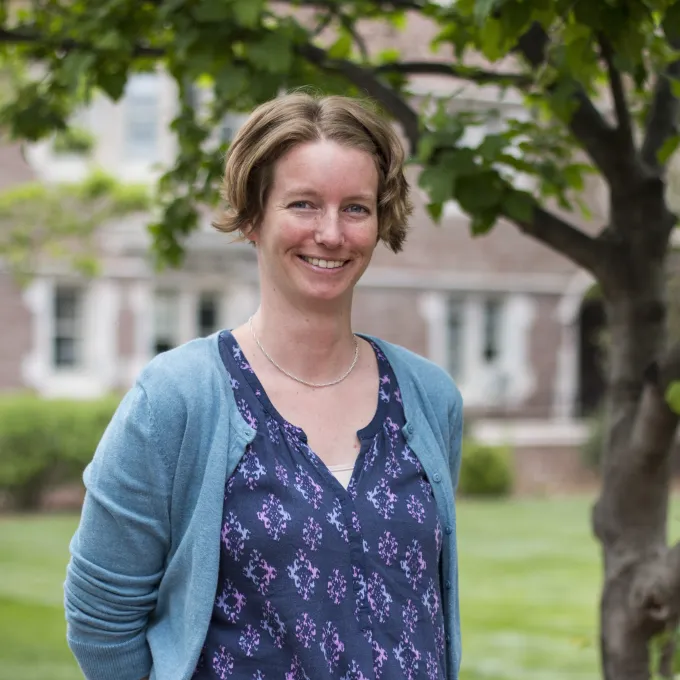
Sarah Baitzel

Sarah Baitzel

​Associate Professor of Archaeology

After 15+ years of conducting archaeological research in the Peruvian Andes, I continue to love and learn about the past and present people of this region. My research into the social identities and practices of ancient agropastoralists is broadly situated within the context of state collapse and vertical (lowland-highland) mobility. Because it takes a team of experts to bring the past back to life, I am a part of several archaeological collaboratives in southern Peru. 

https://anthropology.wustl.edu/xml/faculty_staff/12181/rss.xml
Helina Woldekiros

Helina Woldekiros

Associate Professor of Archaeology

Helina Woldekiros' work focuses on human adaptations in the Horn of Africa during the beginnings of food production, agricultural diets, pastoralism, and mobile responses to climatic change in extreme ecological/environmental settings.

Exploring the Human Story

Watch the Video