MSC 1050-153-244
WASHINGTON UNIVERSITY
ONE BROOKINGS DRIVE
ST. LOUIS, MO 63130-4899
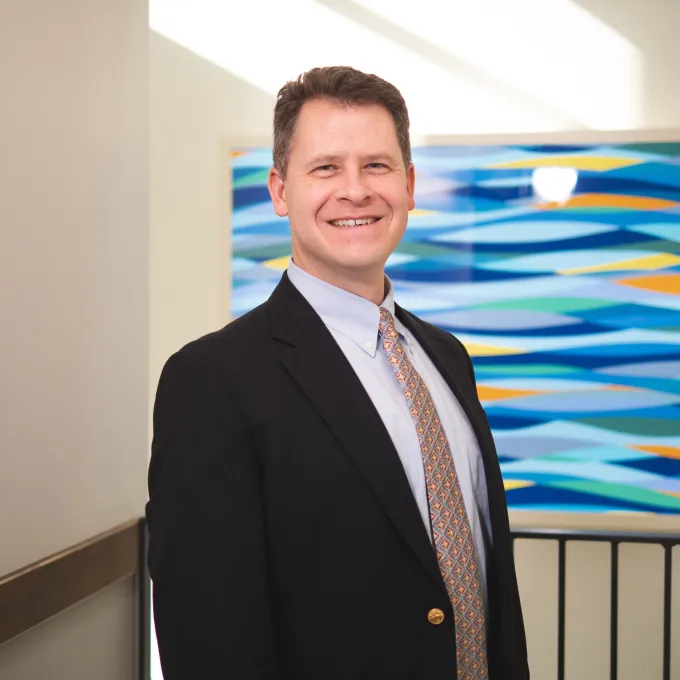
Professor Bubelis' work aims to elucidate not only the specific histories of certain communities and institutions in ancient Greece but also the dynamic intersection between economics, religion, and state that drove broader developments across the ancient Mediterranean world, c. 750-250. He is the curator of the Wulfing Coin Collection.
Professor Bubelis' research interests include Greek history and epigraphy (especially Athens and the Peloponnese, and Northern Greece); economic history and numismatics (particularly taxation and fiscal behavior, banking, numeracy); ancient religion and its institutional dimensions, especially as they intersect with economics; Attic oratory and historiography; and the political economy of the ancient Near East (especially Iron Age Mesopotamia, Cyprus, and the Achaemenid Empire).
recent courses
First-Year Seminar: Power and Persuasion: The Courts ad Laws of Ancient Athens (CLASSICS 1190)
In ancient Athens, each citizen had the power to prosecute others for wrongs committed not only against him but also against society as a whole. Each citizen defended himself without aid of lawyers and judges. This system depended upon an intensely democratic structure of jury courts and laws and upon the development of rhetoric as an artful speech by which to persuade fellow citizens to find one way or the other. Nearly 100 speeches survive from the Athenian courts. and they provide a remarkable window into Athenian society, politics, and law. In addition to reading translations of many of these speeches, we will examine the physical setting of Athenian courts and explore the manner in which this legal system was integral to Athens' democracy.
Ancient Greek Religion (CLASSICS 4600/5600)
For the ancient Greeks, religion lay at the very core of all that they valued, thought, accomplished, created, and experienced. The correct worship of the gods constituted one of the great drivers of all social interaction and structure, be that in matters of war or of housekeeping. The religion of the ancient Greeks stands therefore as one of the most important, surprising, varied, and challenging domains of ancient society that we can study and it has formed an essential part of Classics since the very inception of this discipline some seven centuries ago. There is no text, no image, no place, no idea, no act, and no object that did not partake of or was somehow deeply informed by religious experience, belief, and practice.
We will explore thematically a range of major topics ranging from the nature of myth and the actuality of animal sacrifice to the architecture of temples and the development of tomb cult, especially for heroes, in early Greece. We will pay special attention to the nature and limitations of our evidence and to methodological problems, as well as to an array of perspectives and questions. Concepts such as pollution, sin, purity, and the afterlife will be frequent topics of discussion, and most of our course will focus on the archaic and classical periods. We will therefore spend time elucidating as wide a range of what constitutes 'ancient Greek religion' as possible, including the role of curse tablets and magic, the mystery cults, the prevalence and function of oracles, the introduction of new gods and cults and non-Greeks, and much more. By virtue of the evidence at hand, much of our attention will be devoted to Athens, but we will also elucidate other histories and religious phenomena across the Greek world, spatially and chronologically, wherever possible.
Our practical objectives include achieving broad as well as incisive knowledge of ancient Greek world in its manifold varieties and dimensions, as well as a deep familiarity with an important branch of scholarship devoted to it. In addition, the two assigned papers will constitute important practice in the development of students' abilities to write logical, clear, and properly substantiated research papers, while the presentations and discussion will further students' abilities to develop and defend their ideas and scholarly arguments.
Olympian Shadows: Macedon and Its Neighbors in Antiquity (CLASSICS 4770/5771)
The home of both Alexander the Great and Aristotle, Macedon was pivotal to the course of ancient Greek and Roman history and yet stood apart as a culturally and politically distinct region. Macedonian dynasts dominated the Hellenistic world and deeply shaped Roman reception of Greek culture, while others profoundly affected the intellectual life of antiquity. We will explore topics ranging from ethnicity, religion, and the nature of kingship to urbanization and Macedon's emergence as a great power until its subsequent transformation at the hands of the conquering Romans. We will pay special attention to Macedon's neighbors, especially Thrace and Illyria, as well as to Macedon's relationships with the Persian Empire and the Greek coastal colonies.
The John Max Wulfing Coin Collection
Bubelis and Sarantis Symeonoglou, emeritus professor of art history and archaeology, introduce the exquisite John Max Wulfing coin collection and share some ancient Athenian highlights.